Bambu Lab X2D 3D Printer Specifications
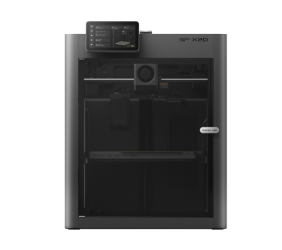
Bambu Lab X2D
Bambu Lab describes the X2D as a dual-nozzle FFF/FDM printer: the main nozzle prints the model while the auxiliary nozzle can handle support material. Its published main-nozzle envelope is 256 × 256 × 260 mm; the auxiliary or dual-nozzle...
Printer details
Manufacturer: Bambu Lab. Technology: FDM / FFF.
Specifications below are based on the linked sources. Manufacturer claims are not independent test results.
Specifications
- Build envelope: Auxiliary Nozzle Printing: Bambu Lab X2D standalone printer: 235.5 × 256 × 256 mm Source
- Build envelope: Dual Nozzle Printing: Bambu Lab X2D standalone printer: 235.5 × 256 × 256 mm Source
- Build envelope: Main Nozzle Printing: Bambu Lab X2D standalone printer: 256 × 256 × 260 mm Source
- Build width: 256 mm Source
- Build depth: 256 mm Source
- Build height: 260 mm Source
- Machine weight: 16.25 kg Source
- Enclosure: Enclosed Source
- Active chamber heating: Yes Source
- Maximum chamber temperature: 65 C Source
- Maximum hotend temperature: 300 C Source
- Maximum bed temperature: 120 C Source
- Filament diameter: 1.75 mm Source
- Included nozzle diameter: 0.4 mm Source
- Included nozzle material: Hardened steel Source
- Extruder type: Direct drive main; Bowden auxiliary Source
- Filament runout detection: Yes Source
- Power loss recovery: Yes Source
- Included camera: Yes Source
- Wi-Fi: Yes Source
- Ethernet: No Source
- Multicolor / multi-material system: Two nozzles included; AMS optional Source
- Advertised maximum speed: 1000 mm/s Source
- Advertised maximum acceleration: 20000 mm/s2 Source
- Filament tangle detection: Yes Source
- Extruders: 2 Source
- Included nozzles: 2 Source
- Supports 2.85 mm filament: No Source
- Manufacturer material guidance: Main nozzle: PLA, PETG, ABS, ASA, TPU, PET, PA, PC, PVA and listed composites; auxiliary nozzle has restrictions. Source · See the full materials guide
- Air filtration: G3 pre-filter, H12 HEPA, activated carbon Source
- Compatible slicers: Bambu Studio; third-party G-code slicers Source
- Supported operating systems: Windows, macOS, Linux Source
Specifications may vary by configuration and region. Missing information will be added as it is verified.
Overview
Bambu Lab describes the X2D as a dual-nozzle FFF/FDM printer: the main nozzle prints the model while the auxiliary nozzle can handle support material. Its published main-nozzle envelope is 256 × 256 × 260 mm; the auxiliary or dual-nozzle print area is smaller at 235.5 × 256 × 256 mm.
The manufacturer lists active chamber heating up to 65 °C, a 300 °C maximum nozzle temperature, and three-stage air purification. These are manufacturer specifications, not independent performance test results.
A good fit for
- Buyers who want separate main and auxiliary nozzles for model and support materials, as described by Bambu Lab.
Keep in mind
- The published usable area is smaller when printing with the auxiliary nozzle or both nozzles than with the main nozzle alone.
- Included AMS equipment depends on the selected package; the standalone X2D and X2D AMS Combo are separate options on the US store page.
Buying advice
Bambu Lab's US store offers the X2D and X2D AMS Combo as distinct selections. Choose the standalone X2D option for the printer without the AMS Combo; verify the selected configuration before checkout. Regional selection and shipping terms may differ.
Accessories and replacement parts
The official US product page lists X2D-compatible options including an Engineering Plate, Vision Encoder, and Multi-Size Hotends Kit. Check the current model and package compatibility on each item page before ordering; these are optional accessories, not included equipment.
Reviews and guides
Bambu Lab's launch article explains the intended division of work between the main and auxiliary extrusion systems. It is manufacturer material, not an independent hands-on review; this packet makes no claim about measured print quality, speed, or reliability.
For a buyer-focused assessment, read the X2D ownership and workflow review. To compare it directly with the Bambu Lab P2S, see the X2D vs P2S comparison.