Bambu Lab A1 mini 3D Printer Specifications
Manufacturer: Bambu Lab. Technology: FDM / FFF.
Specifications below are based on the linked sources. Manufacturer claims are not independent test results.
Specifications
- Build envelope: Published build envelope — Bambu Lab A1 mini standard printer configuration; AMS Lite is separate optional/Combo equipment: 180 × 180 × 180 mm Source
- Build width: 180 mm Source
- Build depth: 180 mm Source
- Build height: 180 mm Source
- Machine width: 347 mm Source
- Machine depth: 315 mm Source
- Machine height: 365 mm Source
- Machine weight: 5.5 kg Source
- Maximum hotend temperature: 300 C Source
- Maximum bed temperature: 80 C Source
- Filament diameter: 1.75 mm Source
- Included nozzle diameter: 0.4 mm Source
- Included nozzle material: Stainless steel Source
- Filament runout detection: Yes Source
- Power loss recovery: Yes Source
- Included camera: Yes Source
- Wi-Fi: Yes Source
- Advertised maximum speed: 500 mm/s Source
- Advertised maximum acceleration: 10000 mm/s2 Source
- Filament tangle detection: Yes Source
- Open-source printer: No Source
- Manufacturer material guidance: Manufacturer lists PLA, PETG, TPU and PVA as ideal; ABS, ASA, PC, PA, PET and carbon/glass-fiber-reinforced polymers as not recommended. Source
- Compatible slicers: Bambu Studio; manufacturer also lists SuperSlicer, PrusaSlicer and Cura when they export standard G-code, with some advanced features potentially unsupported. The specification table lists macOS and Windows support. Source
Specifications may vary by configuration and region. Missing information will be added as it is verified.
Overview
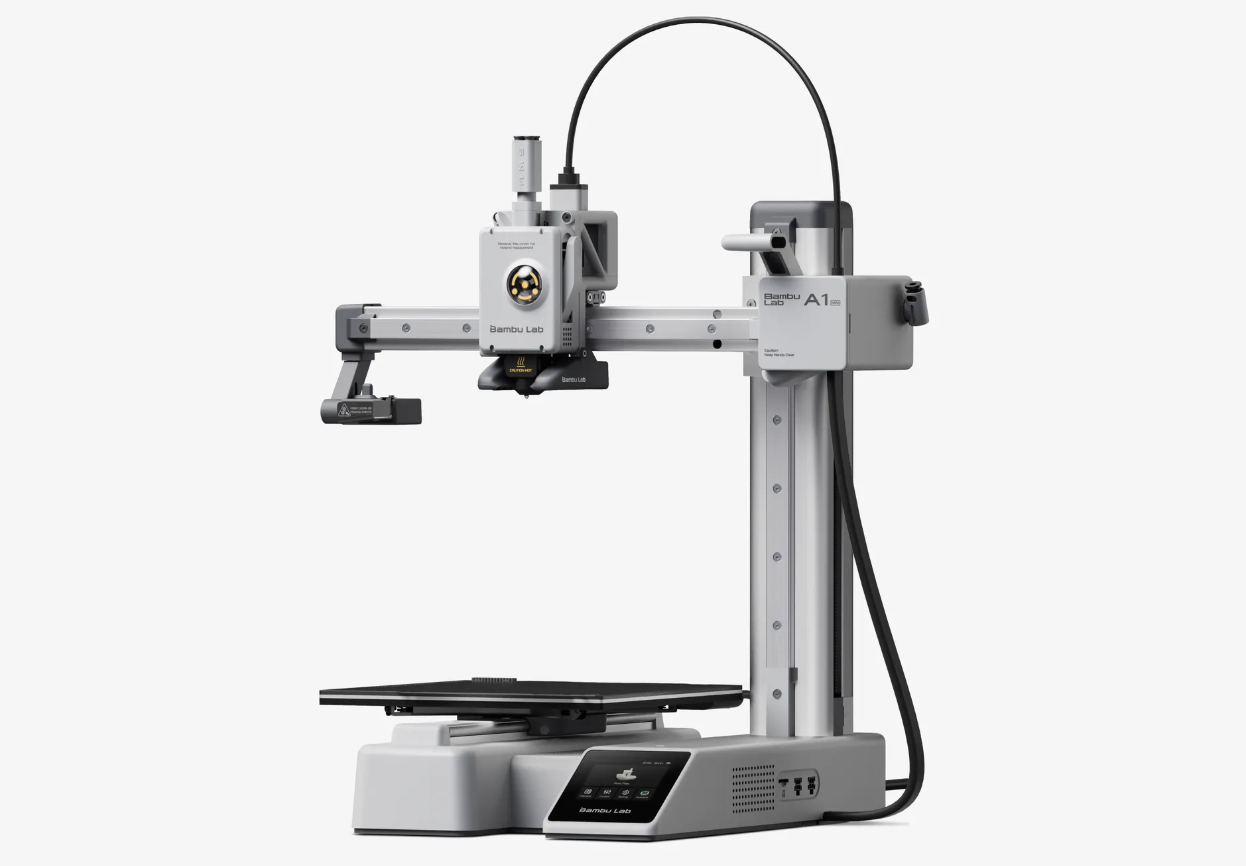
The Bambu Lab A1 mini is a compact FFF desktop printer with a 180 × 180 × 180 mm published build envelope. Its reviewed profile lists a 0.4 mm stainless-steel nozzle and manufacturer material guidance that favors PLA, PETG, TPU and PVA while marking ABS, ASA, PC, PA, PET, and carbon/glass-fiber-reinforced polymers as not recommended. Those manufacturer suitability labels are guidance, not independent material testing. See the Specifications tab for the full sourced profile.
Buying advice
No exact-model US retailer checkout route is verified in the current buying review, so this guide does not list a seller or price. The buyer assessment explains the decision and the compact-workspace tradeoffs.
Accessories and replacement parts
For setup and configuration details, use the manufacturer’s A1 mini quick start guide. The printer profile distinguishes the standard printer from optional or Combo equipment; check the exact package contents before choosing accessories.
Reviews and guides
The buyer assessment covers the A1 mini’s everyday-printing fit, while the comparison explains how its compact FFF format differs from the Prusa MINI+. Owners can also visit the exact A1 mini discussion. These are editorial resources and community discussion, not a claim of hands-on testing by this guide.