

The Microswiss FlowTech Hotend for Bambu Lab X1, X1C 3D Printers is a premium aftermarket hotend built for owners who like their Bambu X1 or X1C but are getting tired of the stock hotend being a more fiddly long-term service path than they want.
This page is the narrow specs and compatibility version of that decision. The point is not to hype the upgrade. The point is to answer four practical questions: what printers it actually fits, what the FlowTech design changes compared with a stock-style rebuild path, what material lane it belongs in, and when the extra spend is justified.
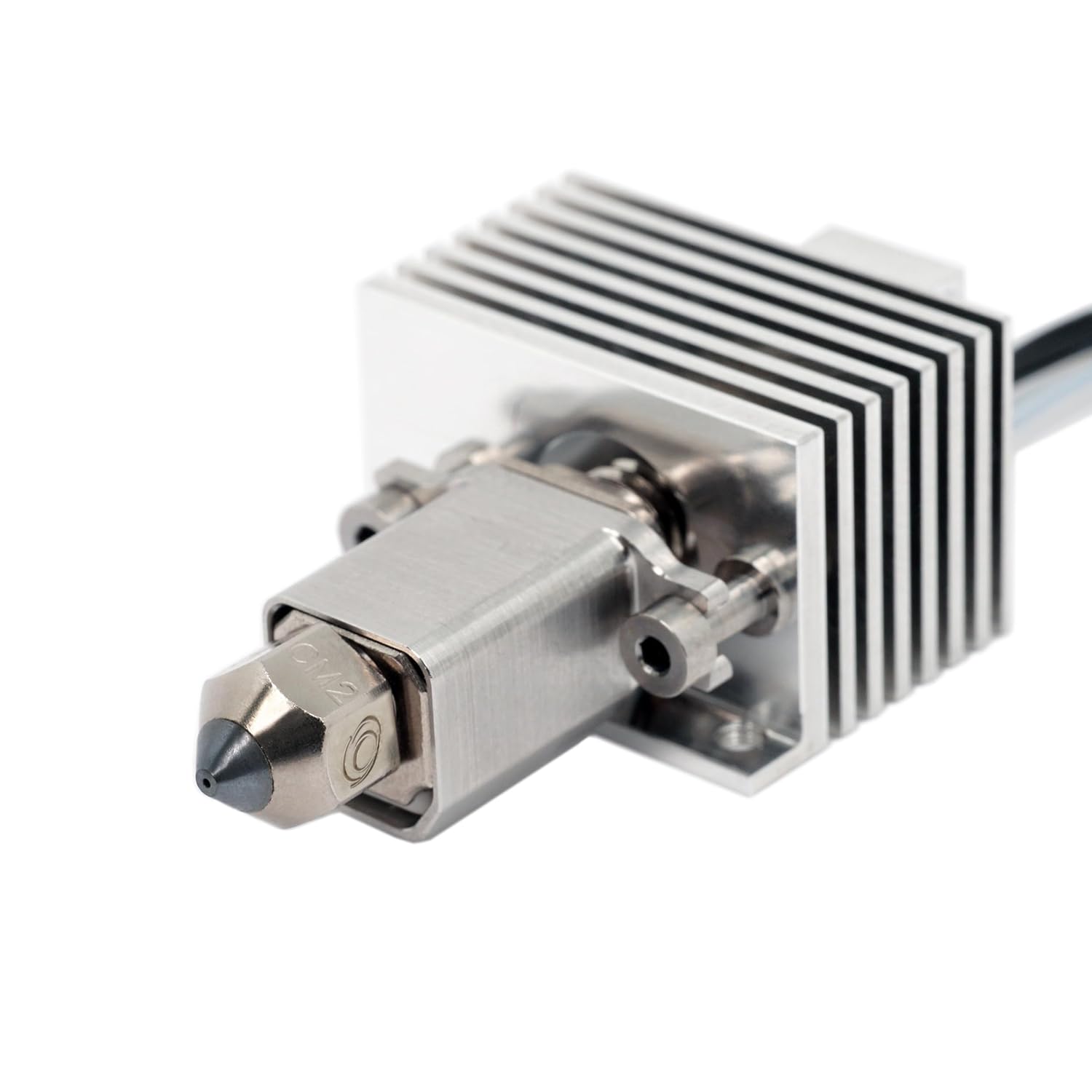
Quick specs and fit summary
- drop-in Micro Swiss FlowTech hotend upgrade built specifically for Bambu Lab X1 and X1 Carbon printers
- one-piece nozzle-and-heatbreak design is positioned around cleaner service, lower leak risk, and easier repeat nozzle swaps than a stock-style rebuild path
- cold nozzle change workflow gives it a strong maintenance-first angle for X1C owners who print enough that service downtime and hot tightening both matter
- high-flow upgrade lane makes it relevant for faster everyday printing plus tougher filled-material ownership when the buyer wants more than a stock replacement
- premium fit is strongest for flagship Bambu owners deciding whether easier serviceability and upgrade headroom are worth paying above OEM consumable refreshes
- useful downstream anchor for X1 and X1C articles about stock-versus-upgrade tradeoffs, abrasive-material readiness, and whether premium Bambu hotend upgrades actually reduce maintenance friction
Printer compatibility
The compatibility lane here is straightforward: this version is the X1 / X1C-specific FlowTech hotend, so it is meant for Bambu Lab X1 and X1 Carbon printers. That matters because FlowTech fit is not a universal Bambu part story. Buyers should treat this as the X1-family version, not a generic Bambu-wide hotend.
What the one-piece nozzle-and-heatbreak design actually changes
The most important spec on this product is not a temperature number or a marketing speed claim. It is the one-piece nozzle-and-heatbreak design. In practical ownership terms, that means the upgrade is positioned around a cleaner service path with fewer leak-path headaches than a stacked, stock-style rebuild routine.
That is why this product keeps showing up in maintenance-first search intent. The value proposition is not just flow. It is less wrench-heavy maintenance drama over time.
Cold nozzle change workflow
The cold nozzle change angle is a big part of why this hotend exists. If you print enough that repeated hot tightening, awkward tool access, and service downtime start getting old, this is the spec that matters most. It turns the upgrade into a workflow decision, not just a parts-bin decision.
That does not mean every X1C owner needs it. It means the product fits best when nozzle swaps happen often enough that easier servicing is worth real money.
Material compatibility and printing lane
The bank's material-fit lane for this product is PLA, PETG, TPU, ABS, ASA, and abrasive materials depending on nozzle selection. That is the right way to think about it. This is not a magic hotend that makes every material easy on its own. It is a stronger ownership path for mainstream materials and a more serious platform when the owner also wants better readiness for tougher filled materials through the right nozzle choices.
That makes it more relevant to buyers who bounce between everyday PLA or PETG work and occasional ABS, ASA, TPU, or abrasive jobs than to someone who only wants the cheapest way to keep basic PLA printing.
What it works best with
- X1 and X1C owners printing often enough that maintenance friction matters
- buyers who want a premium upgrade instead of repeating OEM consumable refreshes
- owners who value cleaner nozzle-service workflow and lower leak-risk positioning
- mixed-material benches where everyday printing and tougher filled-material readiness both matter
Who should probably skip it
- owners who are happy with the stock hotend path and rarely change nozzles
- buyers who mainly want the lowest-cost replacement instead of a maintenance upgrade
- people looking for a universal Bambu hotend rather than an X1-family-specific part
How it compares to the obvious alternatives
The main alternatives live in two buckets: staying with the stock Bambu hotend path, or spending premium money somewhere else in the X1 ecosystem. The most relevant alternatives from the bank are below.
- Bambu Lab stock X1 and X1C complete hotend assembly
- Bambu Lab hardened steel complete hotend for X1 series
- E3D ObXidian High Flow Nozzle for Bambu Hotend
- Microswiss FlowTech Hotend for Bambu Lab P1P and P1S
If the goal is simplest OEM continuity, stock still makes sense. If the goal is easier servicing and a cleaner long-term upgrade lane, the FlowTech case gets stronger.
Bottom line
The spec story on this X1/X1C FlowTech hotend is really a compatibility and ownership story: it fits the X1 family, it centers on a one-piece design with a colder and easier nozzle-change workflow, and it makes the most sense for owners who print enough that covers the premium Bambu X1 and X1C upgrade lane for owners who want easier maintenance and a stronger high-flow hotend option than stock replacements alone..
Audience fit: Good fit for X1 and X1C buyers already comfortable with higher-end upgrades who want cleaner nozzle-service and performance framing.
Affiliate link: Check the Micro Swiss FlowTech hotend for Bambu X1 and X1C on Amazon.
Common questions
Does this FlowTech hotend fit the Bambu X1 Carbon?
Yes. This specific version is positioned for the Bambu X1 and X1C printer family.
Is this mainly a speed upgrade or a maintenance upgrade?
It can support a stronger high-flow lane, but the cleaner service path and easier nozzle-change workflow are the main reasons it stands out.
Is it overkill if you mostly print basic PLA?
It can be. If you rarely change nozzles and do not mind the stock path, an OEM replacement route may still be the more rational choice.