

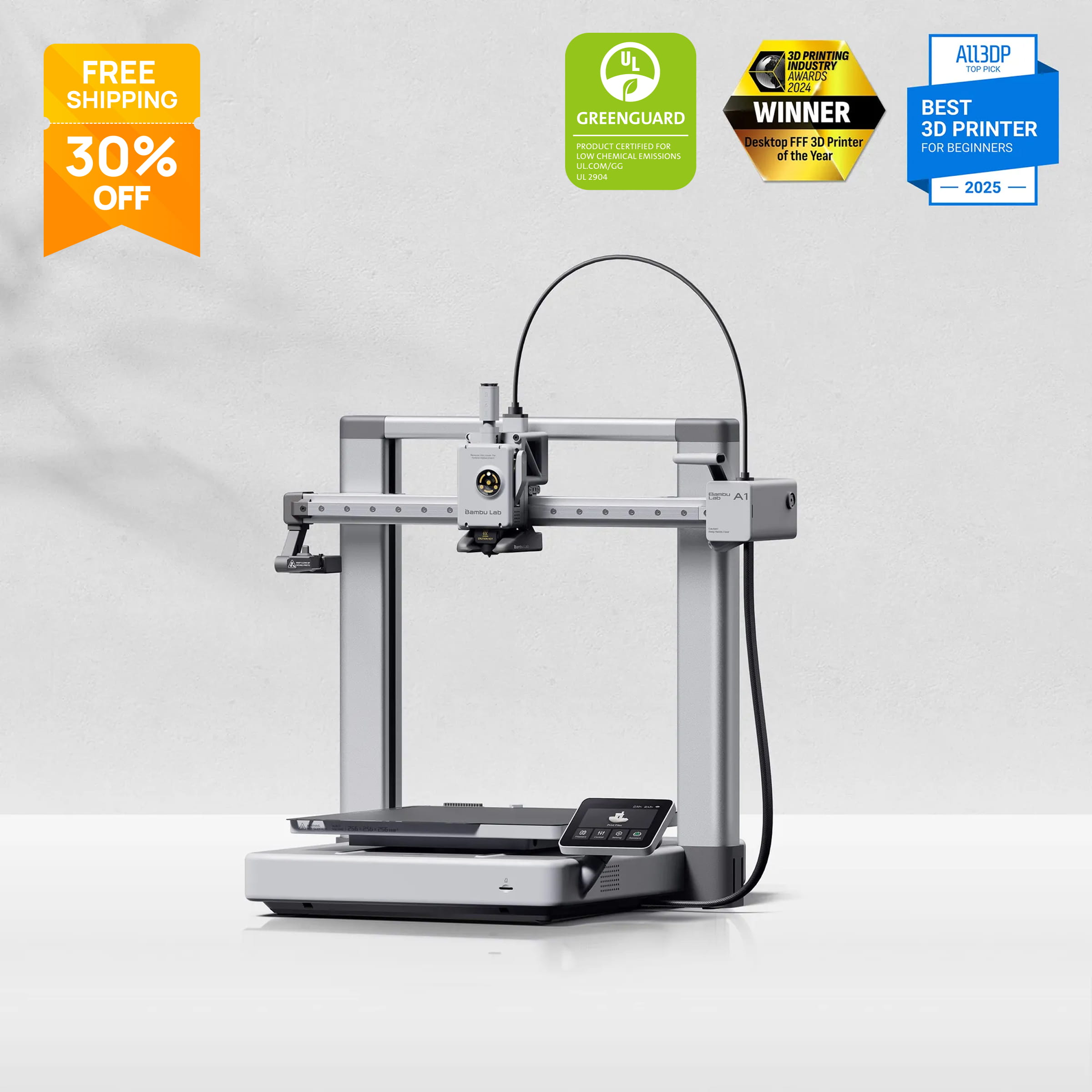
Short answer: no. The Bambu Lab A1 ships with a stainless steel nozzle, not a hardened one. That is completely fine for ordinary PETG, PLA, and most TPU use. It matters much more if you are buying the A1 specifically for abrasive filaments like PETG-CF, glow filament, or glass- and carbon-filled materials.
If your plan is normal everyday functional printing, this is usually a non-issue. If your plan starts with filled or abrasive materials, the stock nozzle is one of the first reasons to slow down and reconsider the setup.
What the A1 comes with from the factory
Bambu lists the A1 with an all-metal hot end and a stainless steel nozzle. In other words, the printer is not starting life as an abrasive-ready machine the way some higher-end enclosed printers do.
That does not mean the A1 is weak. It means the default hardware is aimed at mainstream use first. For buyers printing PLA, PETG, and occasional TPU, that is a sensible factory choice. For buyers who already know they want carbon-fiber or glass-filled filament, it is an important limit to notice before buying.
When the stock stainless nozzle is good enough
- PLA, PLA Pro, and ordinary PETG: this is the normal A1 lane.
- Most beginner and general-use printing: organizers, brackets, housings, shop helpers, and household parts.
- TPU: the nozzle material is usually not the deciding problem; workflow and part expectations matter more.
If that sounds like your use case, the lack of a hardened nozzle should not scare you off. The bigger buying question is whether the A1's open-frame design matches your material ambitions over time.
When the lack of a hardened nozzle actually matters
It matters when your shopping list already includes abrasive filament. That usually means:
- PETG-CF or PLA-CF
- glass-filled filament
- glow-in-the-dark filament
- other blends with hard particles that wear nozzles faster
In that lane, the right answer is usually not "ignore it and hope for the best." The better answer is either:
- plan on a hardened nozzle upgrade, or
- buy a different printer branch if abrasive materials are the whole reason you are shopping.
That is exactly why the narrower A1 PETG-CF buyer page is the more useful next read if carbon-fiber PETG is your real target.
Does this make the A1 a bad buy?
No. It just makes the A1 a better buy for mainstream functional printing than for abrasive-material-first ownership. If you want a low-friction printer for PLA, PETG, and TPU, the A1 still makes a lot of sense. If you want to jump straight into filled engineering materials, this stock-nozzle question is one sign that you may be starting in the wrong lane.
That is also why the broader A1 engineering-materials page matters more than this one if your buying decision is really about nylon, filled blends, or hotter-use parts.
Should you just upgrade the nozzle and move on?
Sometimes, yes. But only if the rest of the printer still fits the job. A hardened nozzle solves wear. It does not solve every other reason a buyer may outgrow the A1.
For example:
- If you mainly want PETG-CF, a hardened nozzle can be part of the answer.
- If you mainly want ABS, ASA, or broader engineering-material work, the bigger issue is not just nozzle wear. It is whether an open-frame printer still makes sense at all.
If that second lane sounds more like you, read Is the Bambu Lab A1 Good for ABS and ASA? before treating a nozzle swap like a full solution.
Bottom line
No, the Bambu Lab A1 does not ship with a hardened nozzle. It ships with a stainless steel nozzle, which is fine for the mainstream PLA, PETG, and TPU lane the printer fits best. If you are shopping for abrasive filament use from day one, treat that as a real buying signal, not a tiny footnote.
For normal everyday printing, this is usually not a deal-breaker. For PETG-CF, glow, glass-filled, or carbon-filled plans, it is one of the first things you should account for before you buy.