

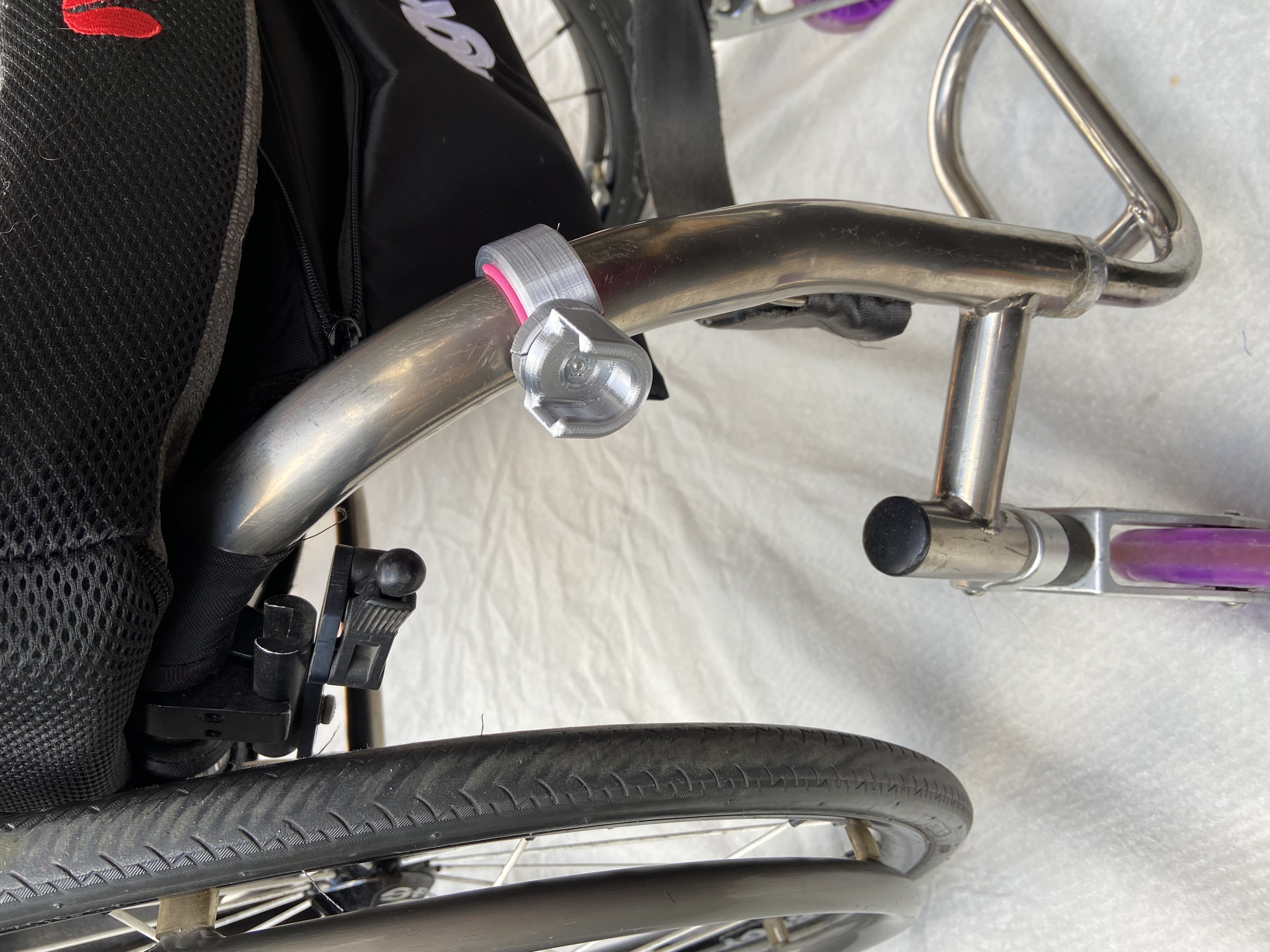
The Modular wheelchair, buggy/pram/stroller, bike attachment kit on Printables stands out because it is not just one holder for one object. It is a small modular mounting system built around a frame clamp, a shared socket, and interchangeable accessory pieces. That makes it a stronger accessibility and mobility story than a thin spotlight on a single cup holder or hook.
For wheelchair users, caregivers, and families adapting strollers or similar mobility gear, the real problem is rarely “I need one random printed part.” The real problem is placement. A bottle needs to sit where it can be reached. A phone needs to stay visible without getting in the way. A bag hook, cup holder, or light mount needs to fit the actual tubing on the real frame instead of forcing a workaround.
This design tackles that exact job with a modular workflow. The source page describes size-specific clamps, a universal socket, and separate accessories, which gives readers a believable path from measurement to setup instead of leaving them with a one-shape-fits-all promise. During review, the listing showed about 73 likes, 157 downloads, roughly 2,109 visible views, 66 public collections, 3 makes, and 4 visible ratings averaging about 4.75. That is solid public proof for a focused mobility-help design.
What problem this model solves
Mobility accessories often fail at the boring but important part: mounting. Off-the-shelf holders can be too loose, aimed the wrong way, or limited to one specific frame diameter. This file set is worth noticing because it treats the mount as a reusable platform rather than a throwaway bracket.
- helps users add accessories to round mobility frames without improvising zip ties and generic clamps
- supports better reach and placement for bottles, phones, and other daily-use items
- creates a repeatable path for adapting more than one accessory to the same frame style
- gives ordered printing a believable role because fit, hardware choice, and material selection all matter
Why this design is worth noticing
The strongest part of the project is its system thinking. Instead of publishing a single fixed holder, the designer built a clamp-size choice, a universal socket, and swappable attachments. That matters because accessibility setups are rarely one-size-fits-all. Frame diameters vary. User reach varies. The right attachment today may not be the right one next month.
The source description also explains the build logic clearly: measure the exact frame section, choose the right clamp size, print the shared socket, then choose the accessory and plug. That project-guide structure is exactly what makes a model article useful even if the reader never downloads the file immediately.
Who this helps most
- Wheelchair users: who need a cleaner way to mount daily-carry items where they can actually reach them.
- Caregivers and family members: who are trying to make a chair or stroller easier to live with day to day.
- Parents using strollers or prams: who want a more adaptable mount system instead of a one-purpose accessory.
- Makers building custom mobility setups: who need a base system that can evolve instead of starting over for every new add-on.
What to check before printing or ordering
- Measure the frame exactly: the source specifically calls out clamp sizing by frame diameter, and that is the kind of detail that decides whether the result feels secure or annoying.
- Match the accessory to the use case: a bottle, phone, bag, or light all create different leverage and contact needs.
- Think about material choice: a mobility mount usually benefits from better toughness and clamp resilience than a quick decorative PLA print.
- Review hardware and assembly needs: if the selected attachment expects screws, straps, or padding, include those in the plan before ordering.
If you are deciding whether a downloaded mobility file is worth ordering, pair this with how to choose downloaded 3D models that are actually worth outsourcing for printing, the downloaded-model rights guide, and how to hand off a downloaded model without guesswork.
Why ordered printing makes sense here
Accessibility and mobility parts do not need hype. They need honest fit, decent material choice, and a setup that matches the user. This model is a good example of where ordered printing can help: not because the part is flashy, but because the result can remove friction from everyday use.
Need help from a professional 3D print farm? Reach out to JC Print Farm and they can help.
Need parts printed? Get a quote at quote.jcsfy.com. We ship globally, offer multiple materials, and keep quoting simple.
Common questions
Is this only for wheelchairs?
No. The source positions it for wheelchairs and strollers, and notes it may also help on bicycles depending on the use case. The key idea is a modular mount for round tubing, not one narrow object.
Why is a modular mount better than a single holder?
Because the attachment job changes. One user may need a bottle holder now and a phone holder later. A modular base reduces the need to rebuild the whole setup every time.
Why does this fit GoodPrints?
Because it solves a real access and usability problem, has clear setup logic, and gives readers a believable reason to order a printed part instead of treating the file like a novelty.
Related reading
- Medline Wheelchair Clamp
- Swivel Wheelchair Cup Holder
- Crutches Holder for Wheelchairs
- Adjustable Cane Holder
Ownership and print-offer note
The public Printables page data exposes `excludeCommercialUsage: false`, which is a positive signal, but this pass did not independently confirm the exact human-readable commercial-use wording on the live source listing. Editorial coverage is clear, while broader production rights for the exact file should still be treated as unclear until the source terms are verified directly.
Affiliate availability note (checked July 31, 2026): The Fowler economy caliper previously linked here was unavailable when rechecked. The footer now points to a current VINCA 0-6 inch IP54 digital caliper; it is a different brand and model. Verify zero and repeatability, measure the actual chair tubing and clearances, and test only light accessories before use; this mount is not for body support, braking, steering, or transfer loads.